Marketing
Real estate photography pricing: how to set your rates
Per shoot, per square foot, packages or add-ons: how real estate photography pricing works, what drives your cost, and how to present it on a booking page.

You could set a first price by looking at the photographer across town and shaving a little off. It works until the first slow month, when the number turns out to have nothing to do with what a shoot actually costs to deliver. Real estate photography pricing is a business decision before it is a marketing one, and it deserves the same care as the shot list.
The pressure is real. The U.S. Bureau of Labor Statistics (Occupational Outlook Handbook, 2025) reports that 67% of photographers are self-employed, and it lists scheduling, record-keeping, billing and advertising as part of the job. Nobody else is going to price your work for you.
The four pricing models
Every real estate photography price list is built from one of four structures, or a combination of them. None is wrong. Each one fits a different kind of business.
- Per shoot: one flat price for a standard listing, regardless of size. Simplest to quote and simplest to book, and it works best in markets where most homes fall in a narrow size range.
- Per square foot: a ladder of brackets, so a small condo and a large estate pay different prices for the same package. It tracks your time on site more honestly and stops large homes from eroding your margin.
- Packages: two or three tiers that bundle a photo count with services, such as a base set, a set with a twilight frame, and a full set with aerials. Packages make the choice easy for an agent who does not want to build an order line by line.
- Add-ons: single items priced on top of any package. Twilight, aerials, virtual staging, extra photos, rush delivery. Add-ons raise the average order without raising the entry price.
What actually drives your cost
Before you choose a model, you need an honest number for what one shoot costs you. Work it from the inputs, not from a competitor's website.
Time on site is only the start. Add the drive each way, the time spent culling and editing or the per-image cost of having the edit done, the admin around every booking, and the share of your gear, insurance, software and vehicle that each shoot has to carry. Then add the margin you need to live on across the slow months, not only the busy ones. A price that covers the shoot but not the business is a price that quietly closes the business.
The free pricing calculator at /resources/photography-pricing-calculator does this arithmetic for you. Enter your market, the property size, the services in the package, the photo count, how many photos you stage, standard or rush delivery, and the one-way travel distance, and it returns a low, typical and high figure for the package. Add what you charge today and how many shoots you book a month to see where your current rate sits. It runs in the browser with no signup.
Pricing the add-ons: twilight, drone and staging
Add-ons deserve the same discipline as the package: price each one on its own cost, not as a round number tacked on.
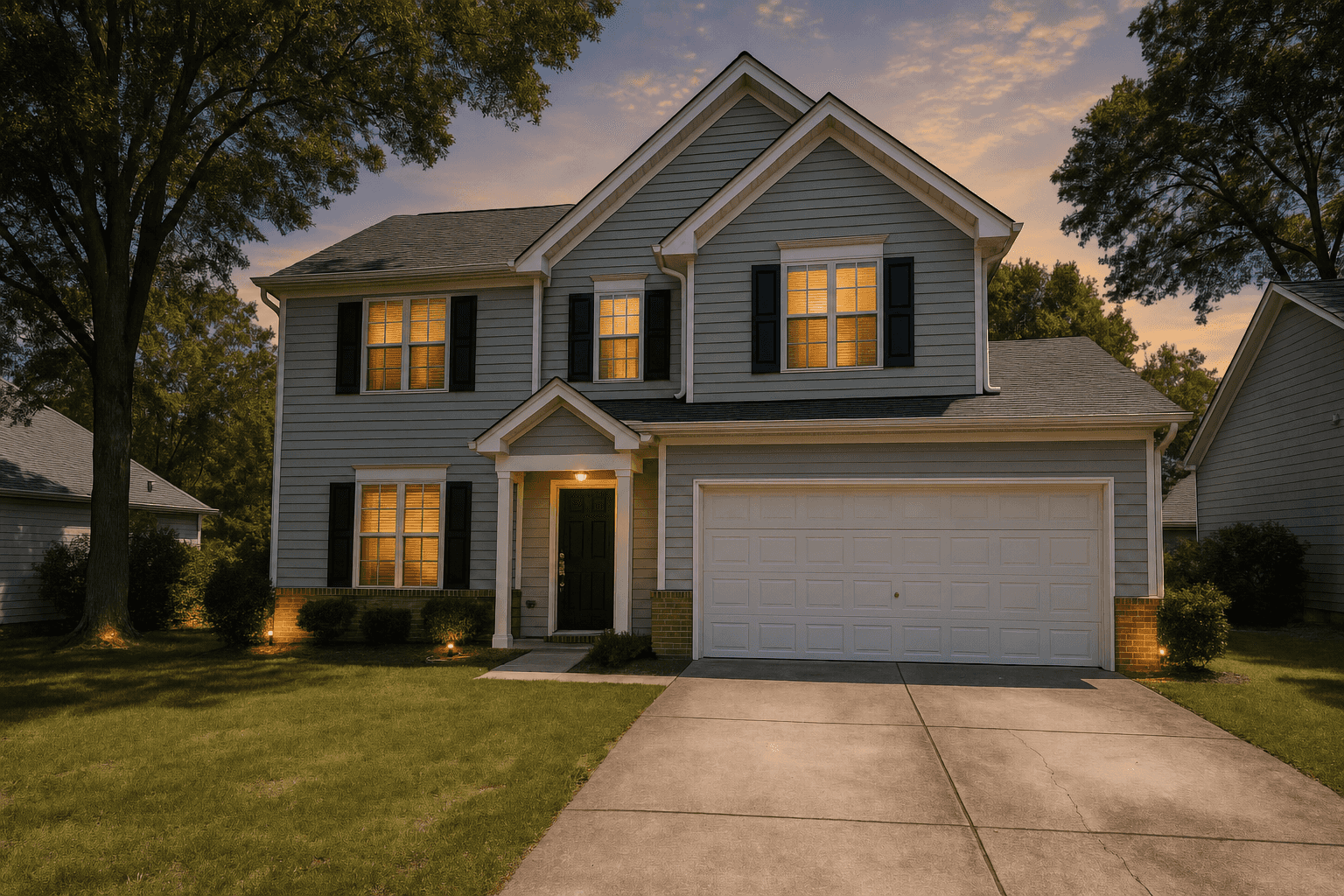
Twilight has two costs. A real dusk session means a second trip or a long day, a short usable window and weather you cannot control, so it should carry a premium that reflects the risk of a return visit. A virtual twilight is a Service that converts a well-shot daytime exterior into a dusk frame, with no second trip. One approach is to price the virtual version as the default twilight add-on and reserve the real session for listings where the exterior carries the campaign.
Aerials carry a license, a second piece of equipment and a wind gate on shoot day. Price them for the days you have to come back as well as the days you fly. Virtual staging is priced per photo, and the unstaged original ships with every staged frame, so the add-on is easy to describe and easy to disclose. Rush delivery is simplest: a flat fee for jumping the edit queue.
How to present packages on a booking page
A price list in a PDF makes the agent email you. A booking page makes the agent book, and the layout of the packages decides how often that happens.
On a Better Listing Media storefront, packages, services, add-ons and coupons are set up on the Products page, and a booking form wired into your calendar runs on every plan. Here is the setup to start from.
- Offer three packages and feature the middle one. The booking page badges one package as featured, so use it to point at the tier you want booked.
- Name packages by outcome, not by photo count alone. An agent is buying a listing that shows well, so say what the package is for.
- Build bundles so the savings show. A bundle package derives its price from its components minus your bundle deal, and every surface shows the saving against booking the parts separately.
- Turn on square-footage pricing if your market spans small and large homes. Each package shows a from price until the client enters the square footage, and the exact tier is resolved at checkout and re-checked on the server.
- Let travel price itself. Set a base location, a free radius and your per-distance rates once, and checkout adds the travel fee from the property address.
- Use coupons for a reason, not a habit. A promo code can be scoped to packages, services or add-ons, carry a minimum order and an expiry, and it only works on your own checkout.
What agents are really paying for
Agents buy certainty. They want to know the gallery will arrive looking like the last one, that the twilight frame will be usable, and that the booking will not need a chain of emails. Zillow's 2025 Consumer Housing Trends Report for Agents found that 78% of sellers are more likely to hire an agent who offers high-resolution photography, which is why a dependable photographer is part of how an agent wins listings in the first place.
That changes how you present price. The strongest signal on a booking page is not a low number. It is a clear package, a consistent gallery in the portfolio, verified review and delivery stats computed from real bookings rather than typed in, and a checkout that answers the questions an agent would otherwise have to ask. Put the proof next to the price and the price stops being the only thing being compared.
When to raise prices
Raise prices on evidence, not on a feeling. The signals are easy to read if you track them.
- You are booked out. If the next open slot is routinely far out and the calendar never catches up, demand is telling you the price is low.
- Nobody flinches. If every quote turns into a booking without a single question about price, you have room.
- Add-ons attach on most orders. When twilight and aerials are on nearly every booking, fold them into a higher package and reprice.
- Your costs moved. Editing, fuel, insurance and gear do not stay still, and your price should follow them at least once a year.
How to raise them without losing the book
Raise new-client prices first and give existing clients notice before their rate changes. Repeat business is worth protecting, so look at each client's shoot count, last shoot and lifetime value before you decide who gets the new rate and who gets a transition. Your client records hold exactly that context, and a reconnect list surfaces the clients who have gone quiet, which is the cheapest booking you will ever win back.
When you raise a price, add something to the package at the same time: a twilight frame, a higher photo count, a branded delivery portal under your own name. An increase that arrives with a visible improvement reads as a better product rather than the same product for more money.
The short version
Price from your cost, not from the competition. Pick the model that fits your market: flat per shoot for narrow size ranges, square-footage ladders for wide ones, packages for easy booking, add-ons for margin. Present it on a booking page with a featured tier, visible bundle savings, automatic travel fees and real proof beside the number. Run the calculator before you publish, review the rate every year, and raise it when the evidence says so.
Sources
- 78% of sellers are more likely to hire an agent who offers high-resolution photography. Zillow, Consumer Housing Trends Report for Agents, 2025
- 67% of U.S. photographers are self-employed. The BLS lists scheduling, record-keeping, billing and advertising as part of that job. U.S. Bureau of Labor Statistics, Occupational Outlook Handbook, 2025