Editing
Virtual staging vs. traditional staging: when each one wins
Traditional staging is a monthly furniture bill; virtual staging is a one-time cost per photo. Here's an honest breakdown of when each earns its keep.
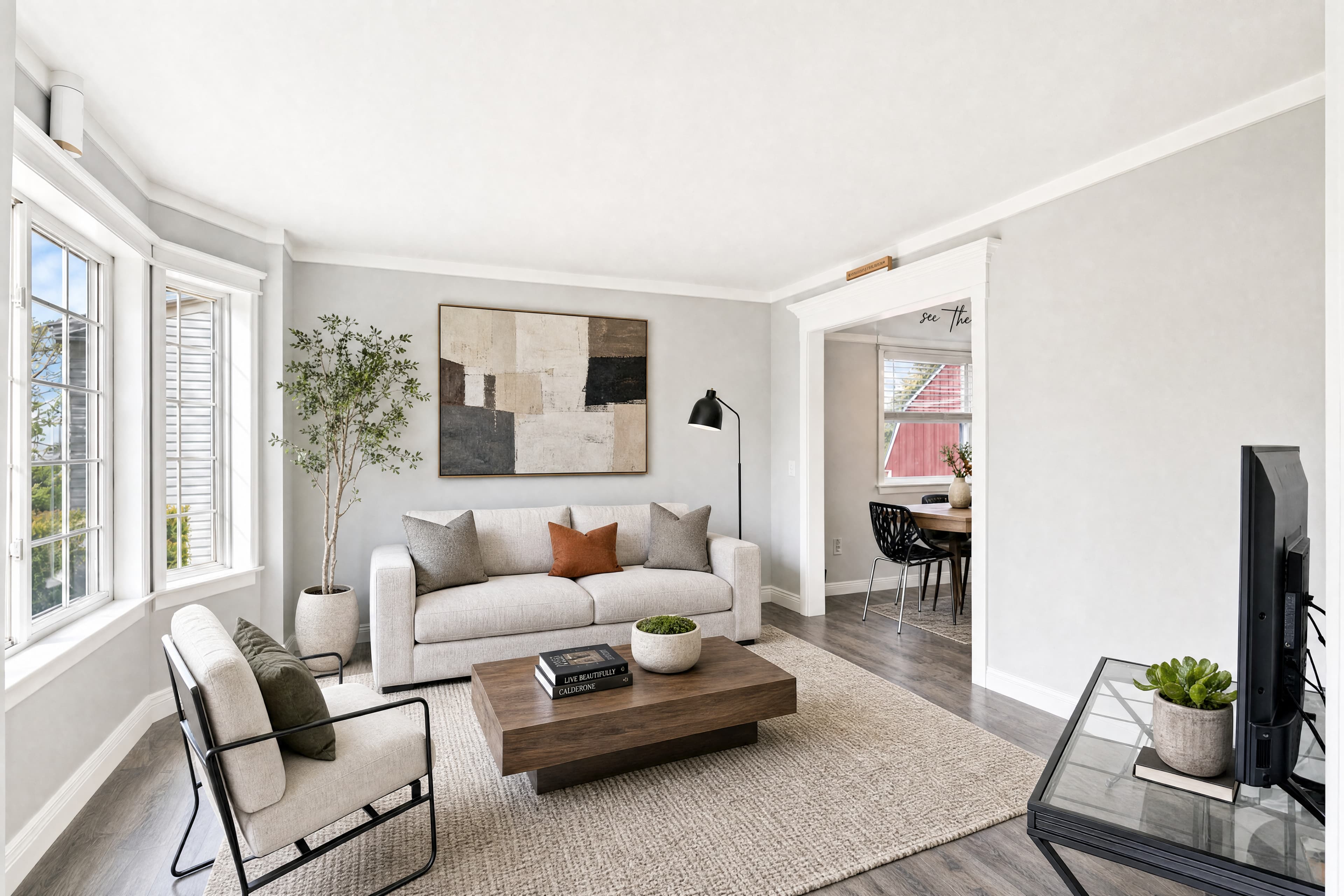
Empty rooms photograph badly. Without furniture there's no sense of scale, no purpose to the space, and nothing for a buyer's eye to land on. A 14-foot living room and an 18-foot living room look nearly identical in an empty photo.
Staging fixes that, and there are two ways to buy it: trucks and furniture, or pixels. Both work. They solve different problems.
What traditional staging does that pixels can't
Physical staging works at the showing, not just in the photos. Buyers walk through a furnished home, linger longer, and get the same scale cues in person that the photos promised. For luxury listings and vacant new builds where every showing counts, physical staging is still the strongest tool.
The trade-off is cost and logistics: design fees, furniture rental billed monthly, delivery windows, and a de-staging deadline. For a home that might sit for a quarter, that bill compounds.
What virtual staging does better
Virtual staging is a one-time cost per photo instead of a monthly furniture bill, needs no delivery window, and lets you restyle infinitely: the same living room can read modern for one buyer pool and farmhouse for another. For online-first attention, which is where nearly every buyer journey starts, it does the same job as physical staging: it makes the photos make sense.
The honest limitation: the buyer arrives at an empty house. That gap needs managing, not hiding.
Disclose it, always
Every virtually staged photo should be labeled as virtually staged, in the MLS remarks and ideally on the image itself. It's required by many MLS boards, and beyond compliance it protects the showing: a buyer who feels misled by the photos doesn't write an offer. Keep the unstaged original in the gallery too, so the listing shows both the potential and the truth.
A simple decision rule
A rule of thumb that holds up in most listings:
- Vacant, mid-market, online-competitive: virtual staging, disclosed
- Luxury or unusual layouts where showings decide it: physical staging
- Occupied but sparse: virtual decluttering + selective virtual staging
- Tight budget, tight timeline: virtual, since it needs no delivery window and no de-staging date
If you go virtual
Quality varies wildly between providers. Look for true-to-scale furniture, shadows that match the room's light, and style consistency across the whole set. One room staged coastal and the next staged industrial reads as sloppy. Studio is being built to keep furniture placement consistent across camera angles of the same room, which is the detail buyers notice without knowing they noticed.